What Happens When Fighter Jets Break the Sound Barrier? The Remarkable Science
By Vedant Lakhe · · 526 words
Topics: Physics, Tech, Aerodynamics, Aeronautics, Aerospace Engineering, Aerospace Innovation, Afterburners, Air Resistance
Introduction
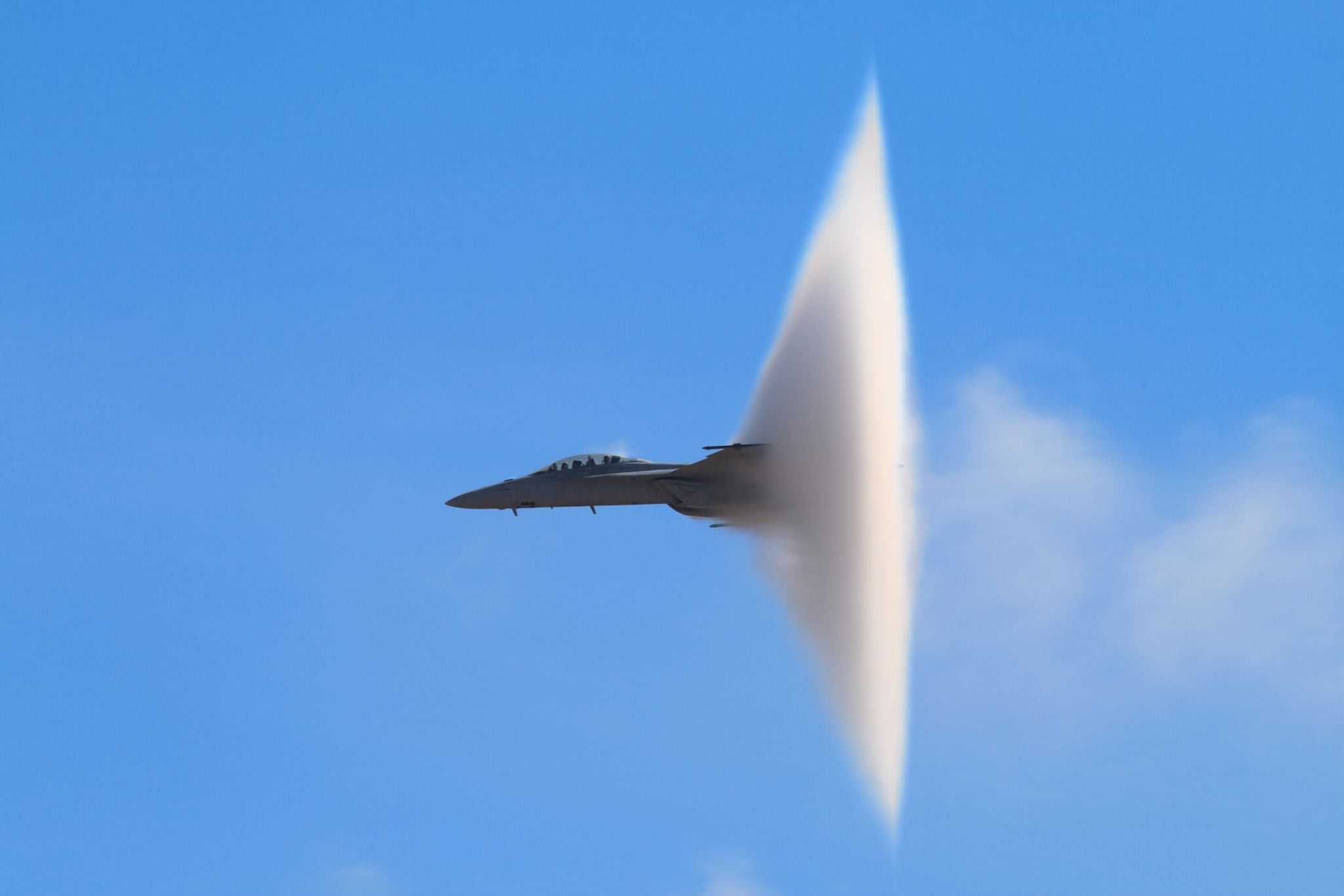
When a fighter jet flies across the sky and shatters the sound barrier (goes supersonic), it is not just a matter of putting a bigger engine inside the metal body. Flying faster than the speed of sound, about 767 mph (1,235 km/h) at sea level, or Mach 1 requires physics, thermodynamics, and aerospace engineering.
Slicing Through the Air: Aerodynamics
As a jet accelerates, the air in front of it begins to compress. As the aircraft reaches the speed of sound, this compressed air forms an invisible wall of aerodynamic drag known as the “sound barrier.” To go through this wall the jet needs a specialised body shape.
Unlike commercial planes with their thick and straight wings, supersonic fighter jets have swept-back or delta wings. These wings help in reducing drag. Engineers rely on a concept called the “Area Rule“. This dictates that the cross-section area of the aircraft must change from nose to tail to minimize wave drag. This is exactly why many supersonic jets have a “wasp waist” in the middle, allowing them to fly through the air with minimal resistance.
The Brute Force: Afterburners
Even with aerodynamics, standard jet engines usually struggle to generate enough thrust on their own to pass the drag at Mach 1. This is where the afterburner comes in play.
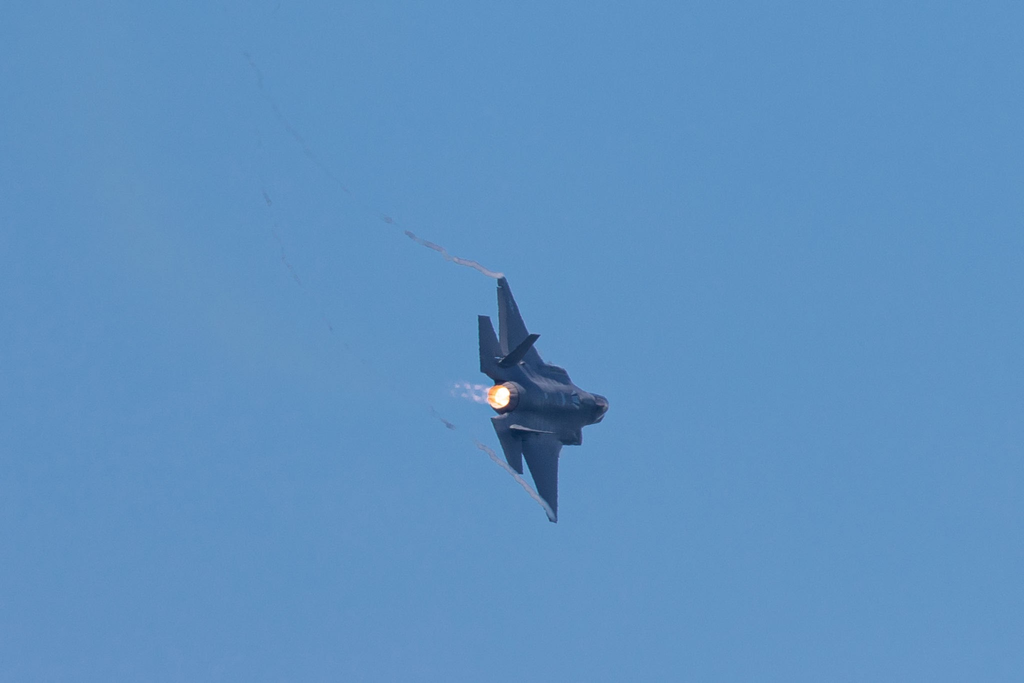
An afterburner is a long tube attached to the back of a jet engine. When a pilot needs a burst of speed, they dump raw jet fuel directly into the hot exhaust gases leaving the turbine. This fuel instantly ignites, creating a massive, fire plume that can increase the jet’s thrust by up to 50%. While afterburners consume fule at a huge rate which sometimes drains the tank in a few minutes, they provide the force necessary to move the aircraft past the sound barrier.
Taming the Airflow: Variable Intakes
While the jet flies faster than sound, the air entering the jet engine must be traveling slower than the sound. If supersonic air hits the engine’s rapidly spinning turbine blades, it would cause compressor stalls, effectively destroying the engine.
To solve this, fighter jets use specially designed air intakes. Many feature and differing geometry of ramps or mechanical cones, that automatically adjust the shape according to the speed of the fighter jet. These intakes create a series of intentional precise shockwaves that act like an aerodynamic braking system, slowing the incoming air down to slower speeds fractions of a second before it reaches the inside of the engine.
The Grand Finale: The Sonic Boom
When the jet finally passes its own sound waves, those waves combine into a single, massive shockwave trailing behind the aircraft in the shape of a cone. When this shockwave moves over the ground, the sudden change in air pressure is heard as a thunderous sound called the sonic boom.
Reaching supersonic speeds is an incredible act of managing extreme temperatures, using fuel in a clever way, and changing the flow of air itself. From the needle shaped nose to the fiery exhaust, every part of a fighter jet is set for reaching the goal of outrunning the power of the engines.