OpenAI’s First Consumer Device Is on the Horizon
By Lakxhya Vishnoi · · 587 words
Topics: AI, Tech, AI Assistant, AI Companion, AI Computers, AI Ecosystem, AI Hardware, AI industry
About OpenAI
OpenAI is an American artificial intelligence (AI) research organisation headquartered in San Francisco, consisting of OpenAI Group PBC, a for-profit public benefit corporation (PBC), partially controlled by OpenAI Foundation, a nonprofit. OpenAI develops generative AI models, particularly the GPT series of large language models. Its release of ChatGPT in November 2022 has been credited with catalysing the AI boom and widespread interest in generative AI.
OpenAI uses a tiered revenue model that combines free consumer access, paid subscription services, enterprise licensing, and application programming interface (API) usage-based pricing. The basic functionality is provided at no cost, while advanced capabilities are offered through paid plans such as ChatGPT Plus and enterprise solutions. OpenAI’s subscription and enterprise offerings are structured around scalable compute usage and API integration into third-party platforms. In 2025, the company reported significant revenue growth associated with expanded computing infrastructure and enterprise adoption.
About OpenAI’s upcoming consumer device
CEO Sam Altman and tech designer Jony Ive have announced a partnership that will bring OpenAI firmly into the realm of consumer hardware to develop a “family of devices.”

Sam Altman, the CEO of OpenAI, has described these devices as a “new generation of AI-powered computers”.
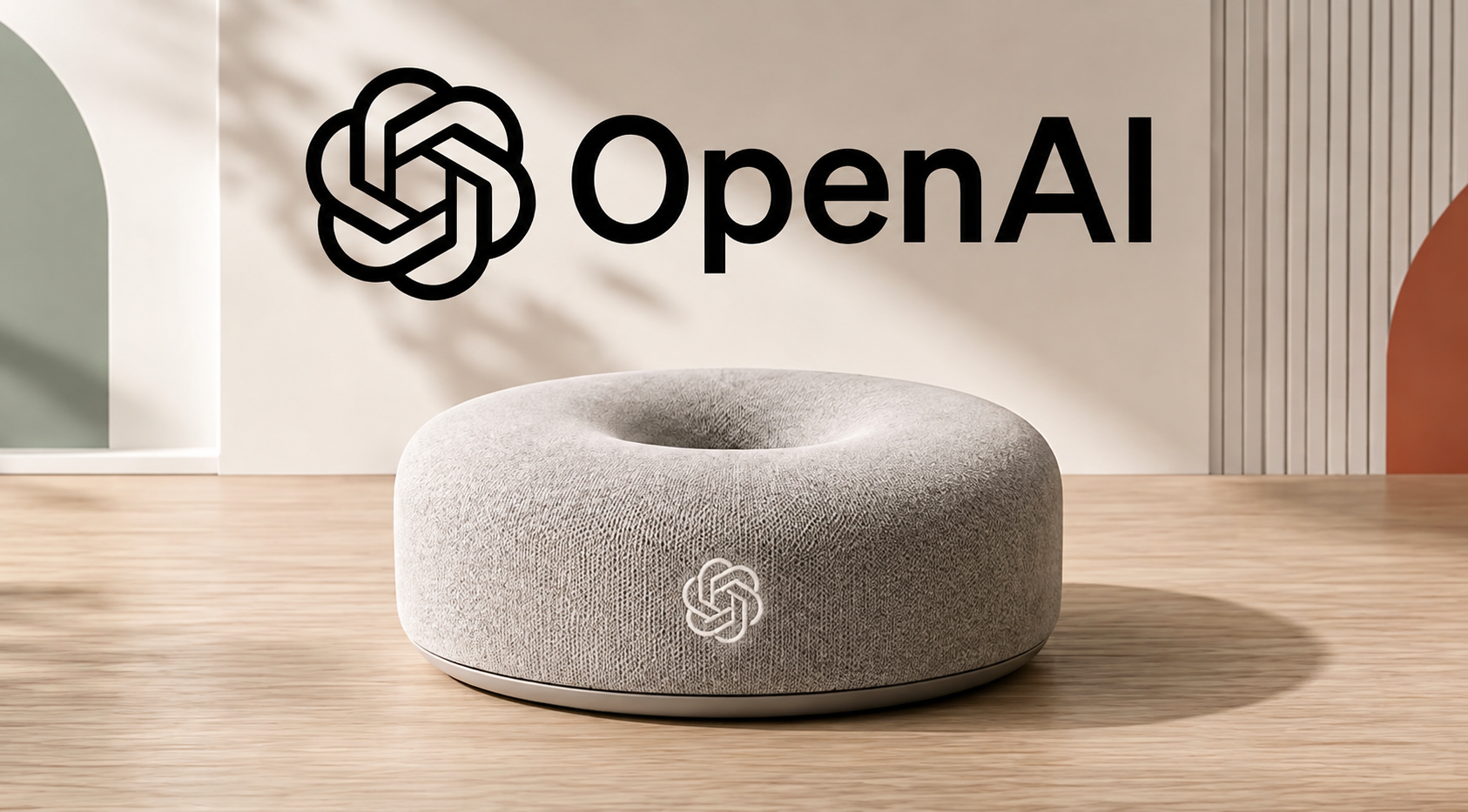
Initial reports indicated it would be pocket-sized, screenless and contextually aware, gathering information from its surroundings and experiences through built-in cameras and microphones. Newer reports suggest that it will be a screenless speaker that’ll function as a humanlike AI companion within the home — controlling smart home appliances, playing media, answering questions, responding to messages and drawing on the broader capabilities of ChatGPT. OpenAI has not commented directly on these reports, however.
Why is OpenAI building a device?
Advancing AI Technologies
Artificial intelligence has become a regular presence in the home and the workplace. If this technology continues to serve in a supplementary role to humans, the next logical step would be to give it the ability to learn from its experiences and surroundings as humans do. This way, users could enjoy a more personalised experience and customise AI tools to meet their preferences.
Breaking Into the Hardware Industry
The push into hardware reflects the growing momentum around physical AI, with major players like Nvidia and Amazon ramping up efforts to embed artificial intelligence into real-world devices. Giving AI a tangible form offers an alternative to software-based products, which may be wearing out consumers. A compact, voice-driven product not only stands out in a crowded market, but also gives OpenAI a path beyond its current screen-bound tools like ChatGPT.
Adding a Source of Revenue
From a business perspective, the release of a new OpenAI device is a no-brainer. According to Altman, acquiring Ive’s io is a decision that could deliver an additional $1 trillion in value to OpenAI, which isn’t likely to turn a profit until 2029 and is set to lose $44 billion before then. Teaming up with io and investing in AI hardware products can establish a much-needed stream of revenue for OpenAI, while equipping it with products that could potentially give it an edge over other devices like smart speakers, wearables and smartphones.
The launch of a device dedicated solely to AI use could have far-reaching implications for all consumer tech. Even if it doesn’t outright replace staples like laptops and smartphones, it could draw user attention away from them. As Altman explains, users need to go through multiple steps just to open ChatGPT in a mobile or desktop format. A dedicated device would enable more natural, real-time interactions, eliminating these steps and reducing screen time.