Nvidia Without Jensen: What the Fallout Says About the AI Bubble
By Veer Solanki · · 1420 words
Topics: AI, AI Boom, AI Boom and Bust, AI Bubble, AI Chip Demand, AI Chip Industry, AI Circular Financing, AI Compute
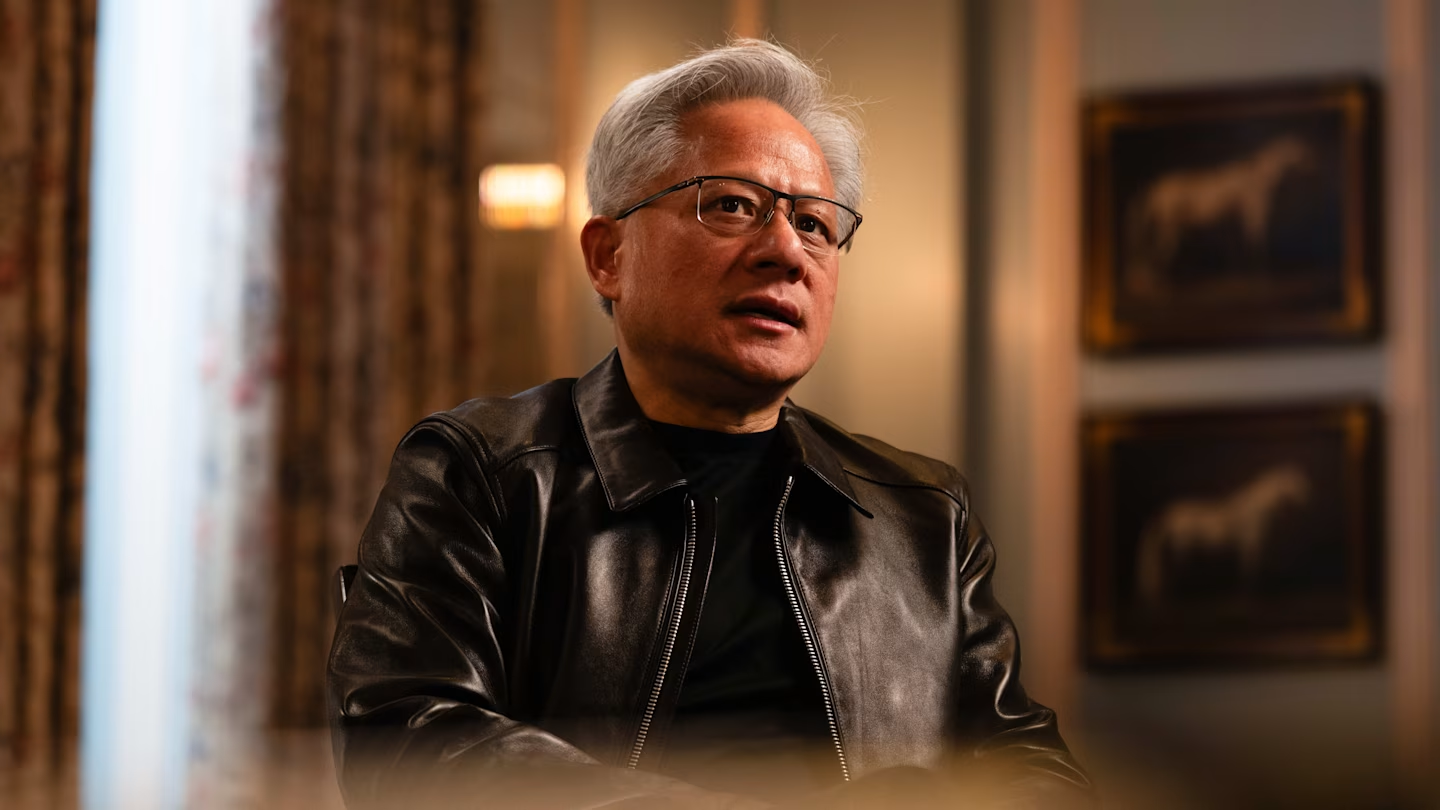
Nvidia has just produced the best quarter in its history, and its share price fell anyway. That says a lot about where the AI bubble stands.
Nvidia reported revenue of $115.8 billion for the quarter. That is double last year’s figure, around $7 billion above Wall Street’s expectations, and more than the annual GDP of most countries. Data centres alone brought in $107.6 billion. The company raised its guidance, increased its long-term growth outlook, and told investors that its next-generation chips were off to an “explosive start”.
The next day, the stock closed 2.9% lower.
The affair
Two weeks ago, on Sunday 8 November, Jensen Huang, the leather-jacketed founder who turned a graphics card company into the world’s most valuable business, sent a memo to staff admitting to an affair. He apologised to his wife, Lori, and their children, and said the board had opened an independent investigation, which he fully supported.
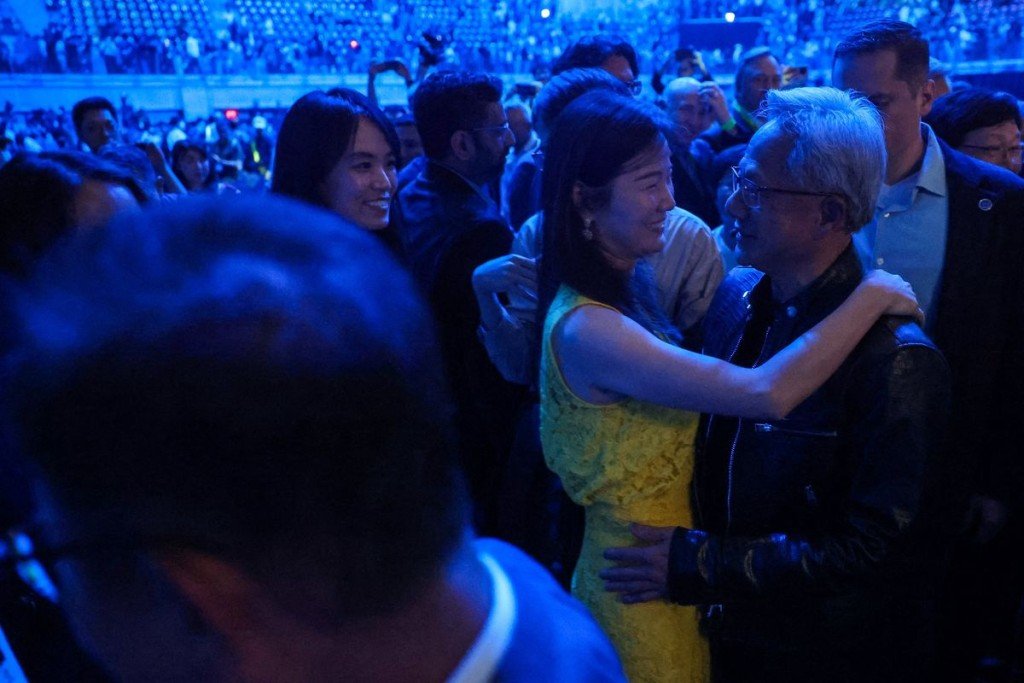
On its own, the affair would have been tabloid material. What made it a national security story was who it was with. The New York Times identified her as Alice Huang (no relation), a former reporter for Chinese state TV who became a senior executive at Megaspeed, a Singapore-based data centre firm and one of Nvidia’s biggest customers in Southeast Asia. US intelligence agencies reportedly suspect that she was working on behalf of Beijing, tasked with encouraging Huang to lobby for more AI chip sales to China. China has dismissed the claims as a smear.
The board’s U-turn
The board initially stood by Huang, saying it had “no reason to believe” that national security or company secrets had been compromised. Investors were less convinced. Over the next two trading days, Nvidia lost roughly $400 billion in value.
On 11 November, the New York Times reported a second affair, this time with a senior Nvidia executive who reported directly to Huang. That turned the scandal into a core corporate governance issue. At most companies, a CEO does not survive a relationship with a direct report, and Nvidia turned out to be no different.
On 12 November, four days after expressing its full confidence in him, the board announced that Huang had resigned as CEO, president and director. CFO Colette Kress was named interim CEO, and Harvey Jones, a long-standing director and former head of Synopsys, became the board’s first-ever chair. The stock fell as much as 14% in intraday trading.
A few hours later, Reuters reported a third relationship, with another Nvidia employee.
The fallout
If the first week was dominated by the scandal, the second was about its consequences.
Huang’s supporters launched a campaign to bring him back, including a petition and a “war room”, and President Trump said he was open to his return. Treasury Secretary Scott Bessent went the other way, calling for an outside CEO and a “dramatic shakeup”, and openly questioning whether potentially illicit chip sales had inflated Nvidia’s earnings.
On the earnings call, the new chair shut the door. The board, Jones said, “does not intend to reinstate Jensen as CEO.” In his first public statement since leaving, Huang admitted to “serious mistakes” and said he would be honoured to return if asked. Nobody is asking. Or at least, not officially.
The investigations
The Wall Street Journal has reported that the SEC is investigating Nvidia. House committees have scheduled a closed-door interview with Huang for 1 December, and he has agreed to give evidence to the Senate Banking Committee next month, probably in public. On Thursday, California’s attorney general served Nvidia with a subpoena, looking into whether China obtained advanced chips or confidential information, and whether Nvidia misled investors.
On Friday, the New York Times also reported that in the mid-2000s, Nvidia paid $1 million to settle with a former HR chief who was fired after raising concerns about Huang’s behaviour. Whatever this is, it apparently did not begin in 2024.
Why the stock fell despite record results
At this point, the story is less about Jensen Huang and more about Nvidia, and AI as a whole.
In the first few days of the scandal, Nvidia’s suppliers, such as TSMC and SK Hynix, actually rallied while Nvidia’s share price fell. Investors were pricing in leadership risk at one company, not losing faith in AI.
That is no longer the case. On earnings day, AI stocks led a broad sell-off on Wall Street, and Nvidia fell despite comfortably beating every estimate. The stock is now roughly 36% below its October peak, and the company is worth less than $4 trillion, down from around $5.8 trillion in about six weeks.
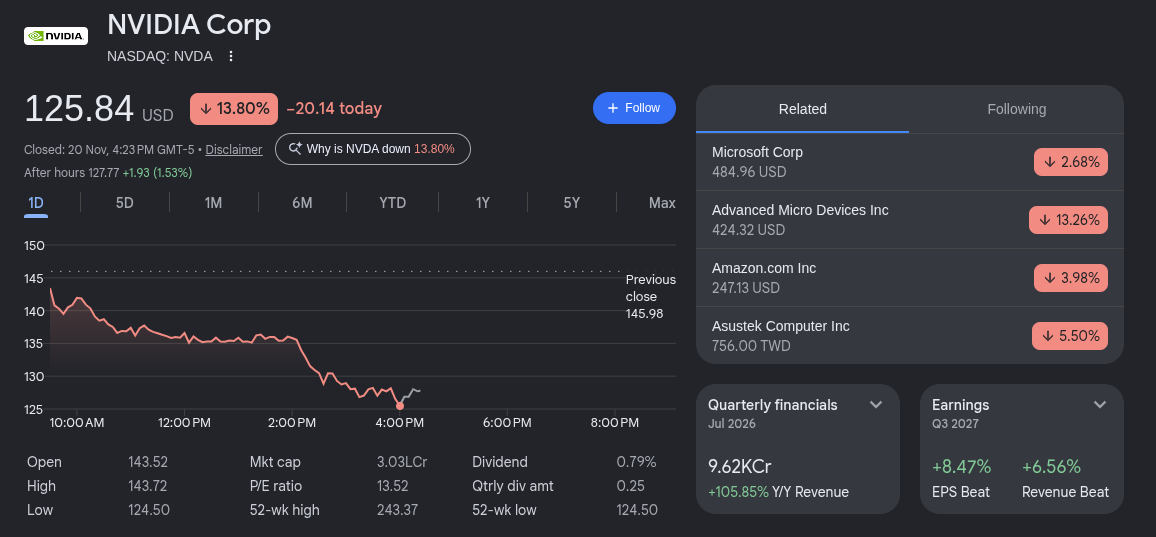
Crucially, on the day Huang resigned, Nvidia was trading at around 12 times forward earnings, its lowest multiple since 2012. That is not what a bubble looks like. In a bubble, investors price a stock as if the good times will last forever. Nvidia is being priced as if they are about to end.
Nobody doubts that the revenue is real. The question is whether the companies buying these chips (Microsoft, Meta, Google, Amazon, OpenAI and a long list of smaller cloud providers) will ever earn back what they are spending. For three years, Huang answered that question on stage every few months with total conviction: “compute is revenue” and “demand is accelerating”. Because he ran the company selling the shovels, markets believed him.
Kress is a highly regarded CFO, and her line, “Our momentum is real”, is backed by strong numbers. But she does not have Huang’s flair, and she did not mention his name once on the call. With the AI story now resting on the numbers alone, investors are quietly starting to ask whether those numbers are peaking.
What should worry the bulls
More important than the affairs is the question of how some of those chips were paid for.
Reports this month said Kress had questioned some of the financing arrangements Nvidia made with its own customers. Earlier reporting described an August board discussion about billions of dollars in guarantees Nvidia was negotiating for customers who could not otherwise afford its chips.
This is the circular money problem that AI sceptics have been raising for a year. If a company is effectively subsidising purchases of its own products, demand is not as organic as it looks. Add Bessent’s question about illicit sales, the SEC probe and California’s investigation into whether investors were misled, and “how real is the revenue?” has moved beyond analysts and into the hands of regulators.
If the new leadership discloses or phases out these deals, we will get a clearer picture of how much of the AI boom was driven by genuine customer demand, and how much by Nvidia’s own balance sheet.
China
Huang lobbied hard against export restrictions on AI chips, and that lobbying helped Nvidia’s H200 win approval for sale to China in late 2025. Now the most famous advocate for those sales has fallen from grace and faces federal and state investigations into whether chips or information reached China. It is hard to see export restrictions being loosened any time soon.
One caveat: Bessent said Huang was not mentioned at all in this week’s US-China talks at APEC, which suggests the administration is trying to keep the scandal separate from trade policy. At least for now.
Will he return?
The board says no. Huang says he would like to, President Trump is open to it, some directors reportedly still want him back, and investor Jason Calacanis has predicted he will return within a year.
I would not bet on it. Three alleged affairs is a pattern, and a settlement from around 20 years ago suggests a long-running one. He also faces a House interview, a Senate hearing, an SEC investigation and a state subpoena. No board brings back a CEO in the middle of all that.
Conclusion
Jensen Huang’s departure has not burst the AI bubble. Nvidia’s business has never been stronger, and its chips are still selling out.
What his exit has done is remove the AI trade’s best storyteller. Without him, investors are left with the raw numbers and the obvious question: what happens when demand slows? A share price that falls after revenue doubles has already given its answer.
The bubble is not bursting, but it is certainly deflating.
The things to watch are Huang’s House interview on 1 December, his Senate testimony, who becomes permanent CEO and, most importantly, Big Tech’s upcoming spending plans. Those will tell us far more about the state of the bubble than anything Nvidia reports.