China’s new Kimi K3 is revolutionalising this field ft. Moonshot AI
By Veer Solanki · · 853 words
Topics: AI, AI Agents, AI Models, Anthropic, Artificial Intelligence, ChatGPT, CHINA, China AI
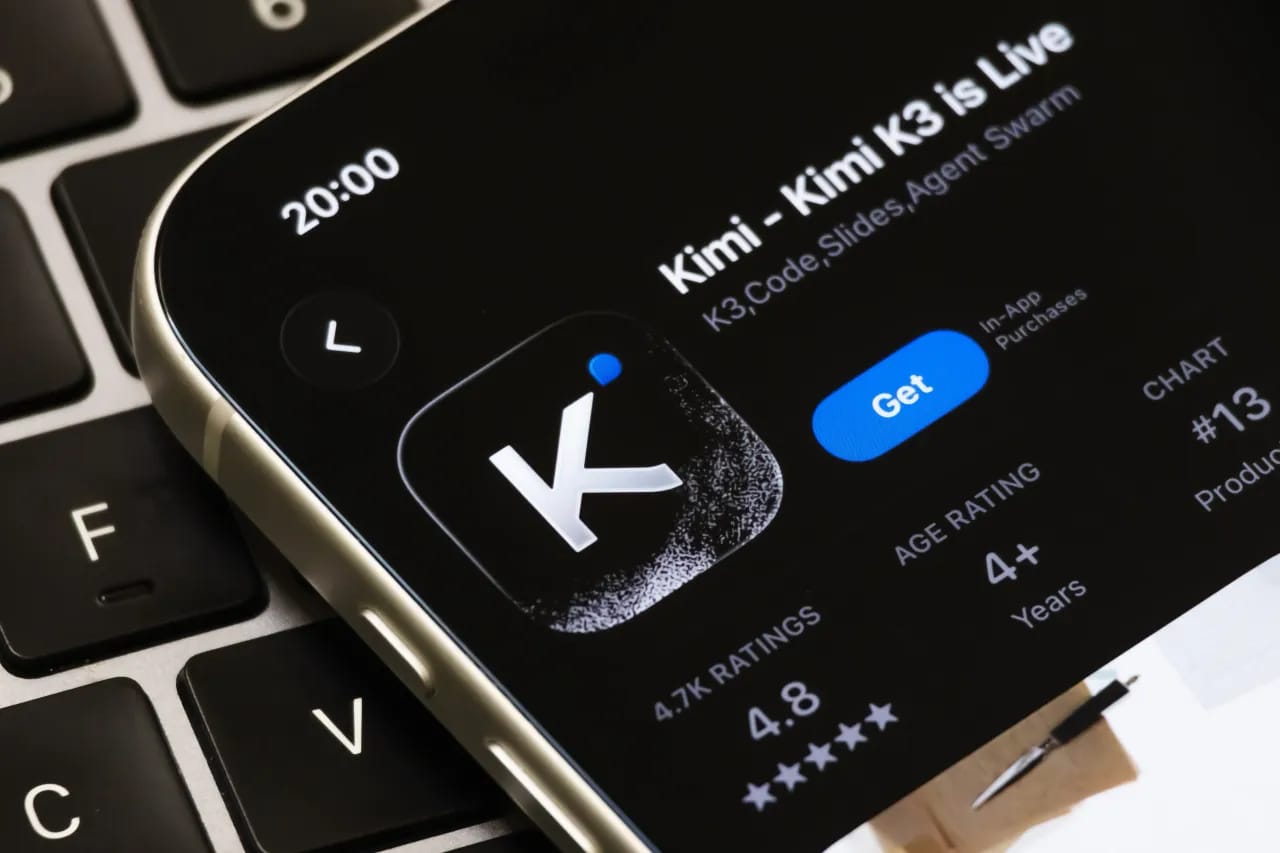
Moonshot AI released Kimi K3 on July 16, 2026, and then had to halt subscription sales within 48 hours due to insurmountable GPU demand. This single fact overshadowed all the model’s technical details: an open-weight Chinese model with enough appeal to derail its own engineering infrastructure. Let’s examine the situation from multiple angles.
The Numbers
2.8 trillion parameters, a mixture-of-experts architecture, 1,048,576 context tokens, vision, and always-on reasoning. Only 16 expert heads are active per token, which drops the parameter count to between 50-60 billion, give or take an order of magnitude. This is the first open model to cross the 3-trillion parameter threshold, and it is nearly three times bigger than its predecessor, K2.6.
Pricing is set at $3 per million input tokens and $15 per million output tokens. This is an expensive choice for the Chinese market, where DeepSeek V4 is already available at around $0.87 and GLM-5.2 around $4.40 per million output tokens. But at the same time, it is a remarkably low price for American users: Fable charges around 50 dollars for the same amount of output.
The benchmark scores are equally impressive: 67.5 on DeepSWE, 88.3 on Terminal-Bench 2.1, 81.2 on FrontierSWE, 77.8 on ProgramBench, and 42.0 on SWE Marathon. Artificial Analysis’ estimates place Kimi K3 in the realm of frontier models, slightly below Claude Opus 4.8 but with the potential to rival Claude Fable 5 and GPT-5.6 Sol in specific areas. It is currently the best model on Arena.ai’s Frontend Code Arena. The company’s claims are tempered with realism, noting that they are in the ballpark of Fable but not surpassing it.
What is actually new
The novelty is found in the architecture, and it is not immediately apparent at first: Kimi Delta Attention (KDA) is a hybrid linear attention mechanism that utilizes a combination of linear and full attention layers for different purposes. The claim is that KDA achieves a 6.3x speedup per one million tokens by reducing the complexity of attention calculations. Linear attention has been a sought-after goal in the field since the release of Mamba and similar works, but it has traditionally come at the expense of performance. KDA’s value proposition is found in its ability to be selectively linear.
Attention Residuals (AttnRes) are a variation of residual connections that allow a layer to selectively retrieve information from previous layers rather than always using the same set of parameters. Moonshot claims that AttnRes achieves a 25% improvement in training efficiency with only a 2% increase in computational requirements.
Finally, Stable LatentMoE, with its quantile expert routing and per-head Muon for stability, provides the necessary distribution capacity for the model. Together with sequence, depth, and width – three independent innovations that combine to produce a cumulative 2.5x scaling efficiency gain over the K2 series.
Other additions include quantisation-aware training from the SFT stage, MXFP4 weights, and MXFP8 activation. The point is that the quantised model is the target of the training process, and nothing is lost in the conversion. This has practical implications for the model’s deployment: Kimi K3 is expected to be available on modern GPUs rather than requiring proprietary hardware. We can expect the weights to be available for download on July 27, 2026.
The accusation
On July 22, White House OSTP director Michael Kratsios announced that his office has information that Moonshot AI distilled Anthropic’s Fable to produce K3. Anthropic policy head Sarah Heck accused Moonshot of IP theft and industrial espionage, while Treasury Secretary Scott Bessent discussed sanctions and Entity List additions. Moonshot’s enterprise business head denied the accusations in the state media, and the Chinese embassy called them unsubstantiated.
There is context to be found here: in early 2026, Anthropic accused Moonshot, DeepSeek, and MiniMax of engaging in industrial-scale distillation. Anthropic’s claims were supported by evidence that showed 3.4 million Claude queries had been made using Moonshot’s infrastructure across 24,000 fraudulent accounts. However, distillation is a completely legitimate practice, and most research labs utilise it in some capacity. The real reason for the outcry can be found in the scale of the operation and the companies’ willingness to engage in such practices on a broad level. At the same time, sceptics have pointed to the fact that Kimi K3’s testing appears to have begun before Fable’s launch, which would undermine the timing of the accusation.
Why it matters
The availability of weights will create a different technical landscape for model regulation. With the ability to download and run Kimi K3, the pressure will be on governments to loosen restrictions on the model rather than impose them. David Sacks noted the dilemma in his July 17 post, arguing that aggressive regulatory measures on the part of the United States would only empower China while a ban would create a closed duopoly within the US.
Regardless of the outcome of the IP dispute, the technical contributions of Kimi K3 deserve respect. The innovations in KDA and AttnRes can be stress-tested at lower resolutions, which means that the research community has an opportunity to engage with the work. This is the part that should capture the industry’s attention beyond the regulatory drama.