Can It Run DOOM? Scientists Just Used Living E. coli to Play the Classic Game
By Vedant Lakhe · · 573 words
Topics: Tech, AI and Biology, Bacterial Display, Biocomputing, Bioelectronics, Bioengineering, Biohacking, Biological Computing

What exactly is E. coli?
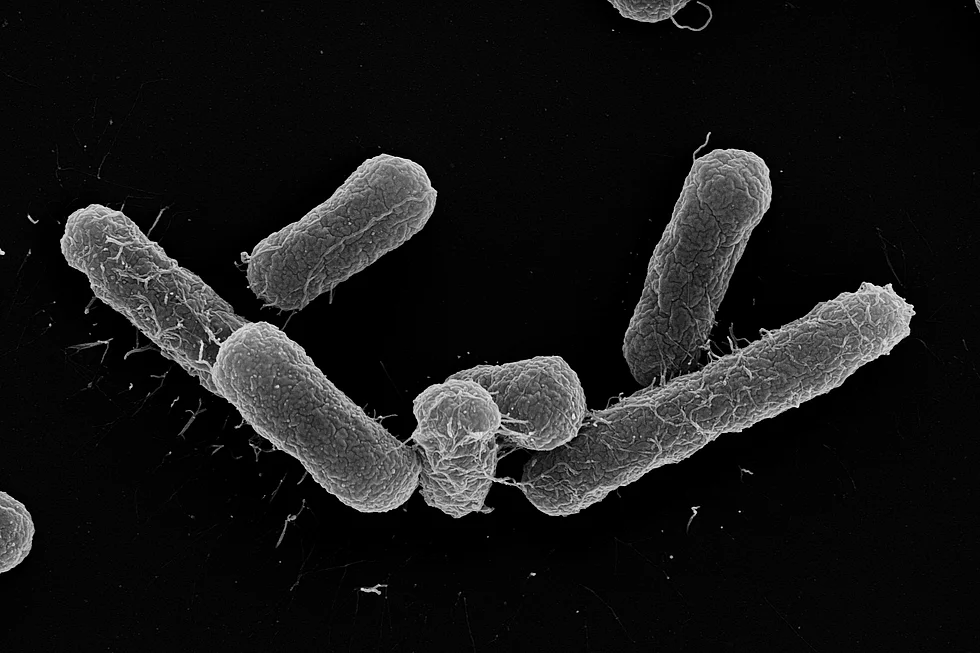
Escherichia coli, commonly known as E.coli, is a species of bacteria found in the intestines of warm-blooded organisms. In scientific research, it is used for studying genetics and advanced biological engineering.
DOOM: The Immortal DNA of First-Person Shooters

Doom is a first-person shooter video game developed by id Software. Players play a tough space marine and fight demonic forces in Mars-based installations. Slowly and gradually, it became very popular, making it a benchmark for testing the limits of digital hardware.
Bacterial Doom: The Ultimate Challenge
For decades, the ultimate benchmark to test new computer hardware was to check if it could run “DOOM”. This legendary game by “id Software” has been played on digital cameras, calculators and even thermostats. However, Lauren ‘Ren’ Ramlan, a graduate student at the prestigious MIT School of Engineering, has managed to go even further. Through her experience and research in biological engineering, she successfully managed to program the 1993 classic in such a way that it can be played on a living display of E.coli.
The Process of bringing doom to life via bacteria
To build this living display, Ramlan first grew cells within a specialised 32×48 1-bit well plate. In this setup, each well serves as a single pixel for the game’s interface. Unlike lcd’s and LED displays, this display utilises the biological properties of E.coli bacteria. This project successfully merged Computer Science with biology, as the small light diodes were replaced by bacterial cells that glow.
The crux of this is the programming required to translate digital signals into biological ones. Ramlan connected her E.coli display to a controller that operates on binary code. This controller then changes the binary code for DOOM into the “addition or omission of a repressor” within the well plates. This chemical signal is like a toggle switch. The chemical signals control the fluorescence of the cells. The E. Coli cells will lighten up when the repressor is not there; when the repressor is present, the E. Coli cells will stay dark.
By managing these micro switches across the entire display, the game’s iconic visuals were changed to a 1-bit format. This was a high-contrast format which allowed the “pixels” to form the shapes of the enemies in the game.
Drawbacks of running Doom on E.coli
- The game runs very, very slowly compared to conventional devices.
- The whole system relies on the time it takes for bacteria to disclose or conceal the fluorescence.
- Frames update in hours instead of taking milliseconds.
Takeaways from the project
While this might be the world’s slowest speedrun for Doom, the project is a huge milestone in biological engineering. It demonstrates that cells can be a medium, capable of responding to instructions given digitally. This experiment highlights a future where computer science and biology work together. Ramlan’s work proves that as long as there are researchers with a sense of curiosity and passion for their work, the answer to “Can it run Doom?” will have other definitions over time.
The Takeaway: Programming Life to Redefine Hardware
Ultimately, this relationship of gaming and biology provides a unique case study in how we can manipulate living matter to do different things.
By treating E. coli as a component of a larger machine, scientists are opening doors to new forms of bio-computing. It is a testament to human ingenuity that a thirty-year-old game is now helping define modern bio-engineering.