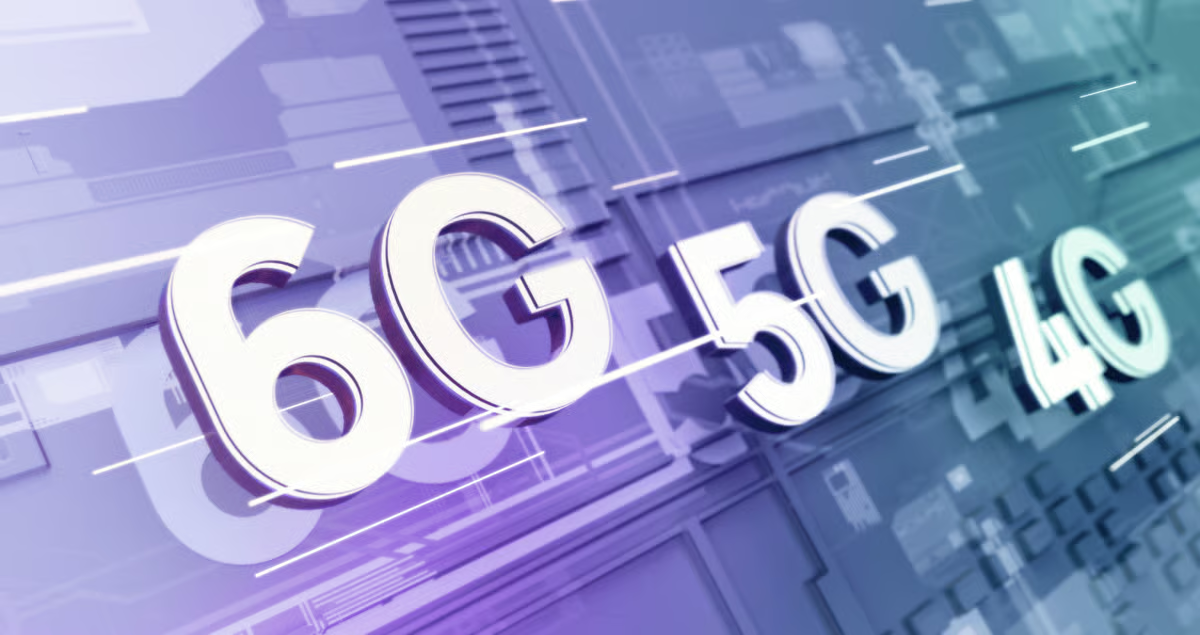
6G – What will the next generation of wireless technology look like?
By Aarush Yadav · · 897 words
Topics: AI, Tech, 5G, 6G, ar, Artificial Intelligence, augmented reality, Autonomous Vehicles
The arrival of 5G marked a revolutionary leap in technology. It introduced faster downloads, lower latency, network slicing and the ability to connect millions of devices. While 5G delivered all of these improvements the tech industry has already shifted to the next milestone, 6G
It might seem like 6G is another yearly upgrade which only gives faster internet speeds, but that’s not what it is about. Researchers envision a network that can combine fast communication with AI, advanced sensing technologies, and computing power that existing networks cannot handle.
Commercial release of 6G is expected to be around 2030, but tech companies are already investing billions in it.
From 1G to 6G
Every generation of wireless communication introduced major changes and not just increased internet speeds
1G- Made voice calls possible
2G- Introduced text messaging
3G- Made internet accessible on mobile devices
4G- Made many mobile applications possible, supported HD streaming
5G- lower latency, faster speeds, and connecting billions of Internet of Things (IoT) devices. 6G will be built on these foundations by creating networks that are not just faster but far more intelligent.
How fast would 6G be?
Researchers expect a theoretical peak speed of 1 terabit per second. That’s 50 times faster than the maximum theoretical speed of 5G. But speed alone isn’t the primary goal, reducing latency and the delay between sending and receiving data is also important.
Future 6G networks will have latencies so low that communication between devices would feel instantaneous. This would be very beneficial for tech where small delays can have big consequences, like autonomous vehicles or robotic surgeries
Technology behind 6G
Developing these improvements would require far more than just upgrading existing cell towers.
A major area of research on 6G involves terahertz frequencies (THz). They can carry huge amounts of information which allows high data rates, but these frequencies bring major challenges as well. THz signals travel much shorter distances compared to cellular frequencies we use right now and they can also be blocked by obstacles like walls, rain or even objects in their way.
This would require future cities to have much denser networks working together so they can provide constant coverage.
AI would play a big part in network management. Rather than manually managing and configuring network traffic, AI systems could predict congestions before they would even occur and automatically reroute data which would reduce energy consumption.
What could 6G enable?
6G could make new technologies possible, and make the existing ones better.
Extended Reality-
Virtual and augmented reality experiences could become more realistic with almost no delay. Instead of being limited by network performance users can interact naturally in digital environments
Cloud Gaming-
Games could be played directly from powerful servers with almost zero latency while still being able to have the high end graphics without expensive hardware.
Smart Industries-
Factories can use many machines, sensors and robots, communicating continuously at fast speeds. AI powered 6G networks would help in reducing downtime and improve efficiency in production.
Digital Twins-
A digital twin is a live copy of an object or a system that constantly updates using data it gathers from sensors. By updating with live data, they can help in monitoring systems, predicting failures and testing improvements before implementing them to avoid consequences.
Challenges with 6G
Despite having the potential, 6G will face several obstacles before it could become commercially viable.
Infrastructure costs would be enormous, and building networks that could support THz’s full potential would require new hardware and huge investments, which seems a bit unlikely.
Energy consumption is another major concern. More powerful networks should remain energy efficient which will become more important.
Security and privacy should also be addressed. With billions of devices being connected so closely with each other while exchanging data constantly, protecting personal information will become more important.
And developing these global standards will be the most difficult task, as it could take years. Countries, several telcom companies and manufacturers will have to agree on various technologies before seamless communication can be achieved across the world.
Who is leading the Development
China, South Korea, USA and Japan have already began research programs on that focus on the next generation of wireless technology
Companies like Samsung, Qualcomm, Huawei, Ericsson and academic institutions are actively researching and testing new things that could become a part of the future standards of 6G
While no one is currently the clear leader, the competition will only intensify over the next years.
Looking beyond speed
Unlike smartphones that launch every year, a new wireless generation will still take years to develop.
Currently, it is estimated that the international standards will be finalized towards the ending of this decade, 2030. Even after that, the adoption will still take years as infrastructure expands.
As global standards take shape, the biggest challenge wont’ be making faster networks, but making more efficient and intelligent ones, and making it accessible to everyone around the world. 6G won’t transform the world overnight, as its true impact will be visible after developers, consumers and businesses discover new ways to use it.
Weather 6G will live up to the expectations we have with it still remains uncertain, but we know that every major leap in wireless technology has had innovations that looked impossible. If that continues, 6G wont just change how fast we can connect, but redefine what it means to be connected.